
Article Highlights
-
For communications leaders at advanced manufacturing companies, the challenge is not simply earning media attention at a tradeshow. It is helping reporters understand technically complex innovation in one of the most crowded environments in which to explain it.
-
Moving substantive media conversations ahead of the event can give reporters stronger context, improve on-site engagement and reduce dependence on unpredictable show-floor schedules.
-
The value of a media interview should extend beyond immediate coverage. Strong interactions can lead to future commentary, contributed content and lasting source relationships.
-
Scientists, engineers and technical leaders can become powerful expressions of a company’s expertise when they are knowledgeable, accessible and useful to reporters.
-
The booth should be treated as one milestone in an ongoing earned media relationship, not the beginning and end of the strategy.
At a major advanced manufacturing tradeshow, attention is scarce.
Reporters are moving between booths, demonstrations and interviews. Scientists, engineers and other spokespeople are balancing media conversations with customer meetings and speaking engagements. Even a carefully planned interview can be shortened, delayed or missed entirely.
For communications teams, that creates a familiar challenge: how do you help a reporter understand a technically complex innovation when the environment itself makes depth difficult?
The answer may be to move more of the substantive conversation off the show floor.
After supporting media engagement across several highly technical tradeshows throughout my career, I have learned that the most visible moment is not always the most valuable one. A busy booth and full interview schedule may look like success, but the true value of a media conversation often becomes apparent later through stronger reporting, follow-up discussions and future opportunities to contribute expertise.
Start the Media Relationship Before the Show
Traditionally, tradeshow media outreach has focused on securing time at the booth.
That approach can create an unnecessary constraint: companies are asking reporters to commit time before they have had a meaningful opportunity to understand the technology, expertise or story behind the meeting.
In my experience, some reporters hesitate to schedule formal on-site interviews simply because they do not yet know what their calendars will allow. Once the event begins, those interviews compete with customer meetings, product demonstrations and other priorities.
That is why we have begun recommending a different approach to clients in this space: move the substantive media conversation ahead of the event.
Focused pre-show conversations with priority reporters can give them early access to the technologies, industry perspectives and experts a company plans to bring to the show. Instead of using initial outreach only to request time, communications teams can offer something useful before attendees ever arrive on-site.
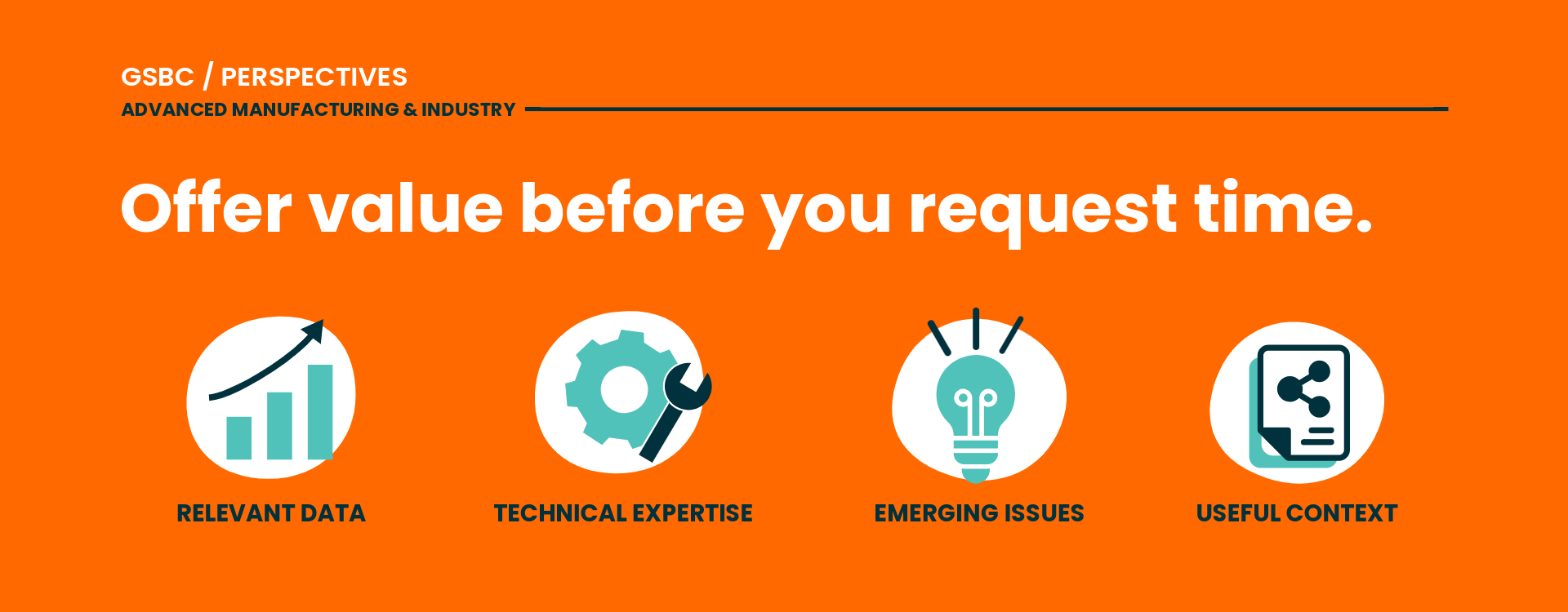
That distinction matters.
According to Muck Rack’s 2026 State of Journalism Report, 70% of journalists want pitches to demonstrate clear relevance to their beat, while 58% value interview access to relevant sources.
A strong pre-show conversation can provide both.
“The first media interaction should offer value, not simply request time.”
In a focused setting, reporters can ask foundational questions, gather initial quotes and identify where deeper storytelling opportunities may exist.
By the time they arrive at the event, they are no longer encountering the company’s story for the first time. The show floor can then do what it does best: bring the technology to life.
Reporters can see demonstrations, engage more naturally with experts and ask better-informed follow-up questions. Subject-matter experts also benefit because they can build on an established foundation rather than trying to compress a complex technical story into a few rushed minutes.
Measure the Relationship, Not Just the Immediate Coverage
The value of a tradeshow interview should not be measured only by what publishes during or immediately after the event.
Earlier in my career, it was tempting to view immediate coverage as the clearest sign of success. Over time, I have seen that some of the most productive conversations create value much later.
A journalist may leave the show without publishing a story, then return weeks later with questions for another assignment. An initial interview may lead to a technical article in a future issue. A reporter who meets an approachable and knowledgeable scientist or engineer may come back when a timely industry topic creates a need for expert commentary.
That longer-term value is significant.
Muck Rack reports that 53% of journalists say relationships with PR professionals are important or very important to their success. One productive tradeshow conversation can therefore create value well beyond the event, particularly when an expert proves knowledgeable, responsive and easy to work with.
Through our tradeshow media work supporting companies such as Dow and Americold at events including The Battery Show, in-cosmetics Global and Groceryshop, we have seen initial conversations evolve into follow-up technical questions, contributed content opportunities and future requests for expert perspectives.
Those outcomes may not be visible during event week, but they can extend the communications value of the original interaction for months afterward.
The tradeshow was not the finish line. It was the point at which the company and its experts became credible, accessible resources.
Make Technical Expertise Easier to Discover
The long-term value of these relationships is becoming even more important as AI changes how buyers discover companies, evaluate solutions and form perceptions of expertise.
G&S Business Communications’ (GSBC) Beyond the Noise: 2026 Advanced Manufacturing Outlook examines the increasing role that authoritative third-party content and expert perspectives can play in that discovery process.
That gives earned media relationships a longer digital life.
A tradeshow interview that leads to earned coverage, expert commentary or contributed content does not disappear when the event ends. It becomes part of the public body of evidence that customers, reporters and AI-enabled search tools may encounter when evaluating a company’s expertise.
For advanced manufacturing companies, that creates an important opportunity.
The people best equipped to explain complex technologies are often the scientists, engineers and technical leaders responsible for developing them. In technical industries, these experts can become some of the most credible entry points into the brand.
Every interview, expert quote and thought leadership contribution adds another proof point to the company’s body of expertise.
That means communications teams should think beyond securing a single media hit.
The larger objective is to make credible expertise consistently visible, accessible and useful.
Treat the Booth as a Milestone, Not the Whole Strategy
Tradeshows remain important in advanced manufacturing, particularly in industries where physical proof, technical performance and hands-on demonstrations matter.
But the booth should not carry the full burden of the media strategy.
A stronger approach connects three moments:
-
-
Before the show: Give reporters context, access and a reason to care.
-
At the show: Bring the story to life through demonstrations and deeper expert engagement.
-
After the show: Maintain the relationship through follow-up, commentary and future thought leadership opportunities.
-
Each stage should build on the one before it.
That makes the booth one milestone in a longer media relationship rather than a single high-pressure moment that has to accomplish everything at once.
What Should Communications Teams Do Before the Next Tradeshow?
Before your next major event, ask:
- Am I using initial outreach only to request time on a reporter’s calendar, or am I offering something useful that can make their pre-show work easier?
- Which experts and technical stories would benefit from a focused conversation before the show?
- Am I connecting our innovation to the specific industry issues this reporter already covers?
- How can pre-show briefings, on-site demonstrations and post-show follow-up work together as one continuous earned media strategy?
When companies make their experts available before the show, create productive engagement during the event and remain accessible afterward, they create more than an event-week media opportunity.
They build the trust, authority and relationships that can keep their expertise visible long after the booth comes down.
Key Takeaway
The tradeshow booth should be a milestone in the media relationship, not its starting point.
By creating dedicated opportunities for reporters to engage with experts before the event, communications teams can make on-site conversations more informed, strengthen long-term media relationships and extend the value of earned media well beyond the show floor.