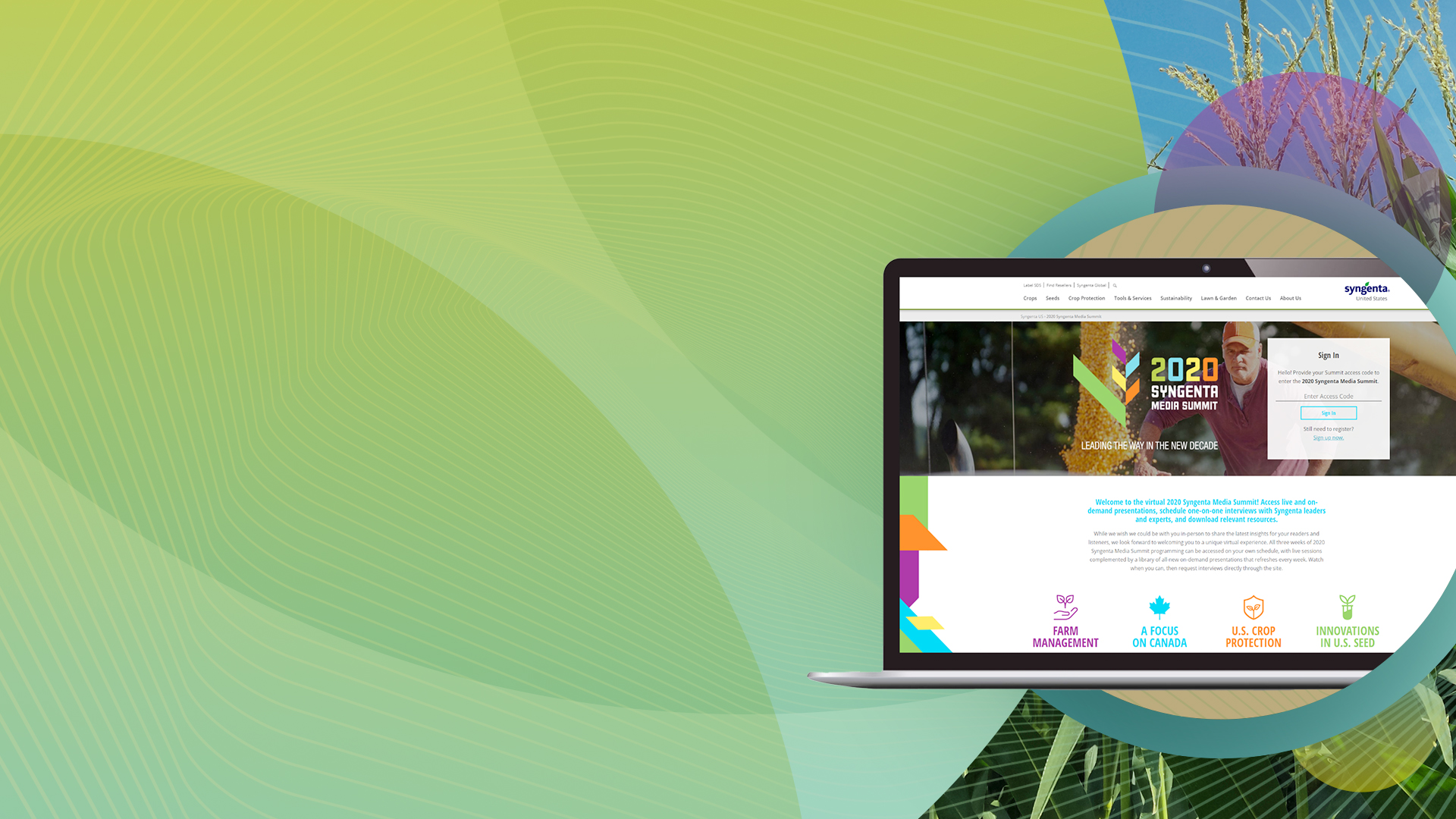
When the bi-annual Syngenta Media Summit was forced to go virtual in 2020 because of COVID-19, the team had to pivot quickly. But instead of simply trying to convert the three-day event into a virtual shell of its in-person self, G&S worked with our client Syngenta to craft a unique experience based on the specific needs and wants of the targeted media.
G&S built a fully custom event portal to make access to information and interviews easier than ever for attending media. This bespoke strategy was a resounding success leading to unmatched media coverage and a highly satisfied client. To top it off, the event also won the North American SABRE In2 Innovation Award for Best in Digital Brand Platforms, a Golden ARC (Ag Relations Council) merit in the website category and the Ragan Video, Visual & Virtual Award for Best Virtual Press Event.
To get the scoop on this champion campaign, I spoke with our resident client service managers Emily DeCamillis and Heather Manhardt.
G&S has worked with Syngenta to plan this bi-annual event since 2002. How did you strategically approach the 2020 event differently than in years past?
ED: Our goal is always to make the Media Summit a valuable experience for ag media – that didn’t change. But we began planning the 2020 event before the COVID-19 pandemic hit, so our execution had to change. We initially delayed some planning decisions thinking an in-person event would still be possible, but ultimately, we had to plan a brand-new virtual event in about a quarter of the normal planning time.
HM: Once we knew the event was going virtual, we reached out to a handful of our ag media contacts who attended the event in previous years for their insights.
We learned the three most important things to media:
-
-
- Access to spokespeople for interviews – while the information presented during Media Summits is helpful context, media are looking for their own unique story angles.
- Flexibility in a virtual environment – three days in person does not equate to three days on Zoom calls; we needed to provide a mix of scheduled events and on-demand content.
- Additional resources – for in-person events, the team historically provided a binder of presentations. A virtual environment enabled us to provide a range of files to download – presentations, transcripts, videos, high-resolution images and more – to help reporters build their stories.
This guiding information from our target audience was helpful for the team in planning and executing the virtual event in a short period of time.
Why was it critical for G&S to build a fully customized digital experience?
ED: We didn’t want the virtual event to lack all the valuable pieces of an in-person event. We wanted to build an experience that had all the markers of the in-person summit – one-on-one interviews, presentations with Q&A, and loads of resources for the media. Simply pivoting to an all-day virtual webinar wouldn’t cut it.
How was the event received by the media and by Syngenta?
HM: The event was a resounding success! We were initially worried about how a virtual execution would compare to an in-person event, but we secured more coverage in more outlets with this approach. I think one driving factor was that more reporters could participate since the time and budget commitment was much less than an in-person event. This made the opportunity more accessible for a wider range of outlets and editors.
We had 52 U.S. ag media register for the event, which represented 25,402 print subscribers, 2 million unique monthly online visitors and 839 radio stations. During the three weeks of the event, reporters conducted 27 one-on-one interviews with Syngenta leadership. Even more impressively, coverage of the 2020 event eclipsed coverage of the most recent in-person event, generating 78 articles in 53 unique outlets. That’s up from 65 articles in 40 unique outlets in 2018.
In a post-event survey, media offered near-universal praise of the Syngenta Media Summit’s virtual iteration. As one journalist put it, “The Summit was well-organized and orchestrated. Very convenient to access and communicate with those necessary to interview.” – delivering on G&S’s objective and promise to Syngenta and media stakeholders alike.
What advice would you give other communicators who are considering a fully virtual event experience?
ED: Get started planning early! There are so many details to consider with a virtual event, from the platform to emails to content and all the dress rehearsals and dry runs along the way. Things will change as you go, but it’s easier to update your plan than build one on the fly.
HM: Don’t just think about what you want to communicate during an event, especially during a virtual event. Consider the audience and what they want to get out of the event, and then figure out how those things can work together. People have so many distractions and options, so make sure they are invested enough to sit down and watch, listen or interact with your content.