
Long before COVID-19, conscious consumers have flocked to online platforms to discuss environmental and societal issues. As circumstances change – because of a global health pandemic or a catastrophic environmental event – consumer perceptions about those issues also change, making the need for proven science even more essential and clear communications even more critical.
Let’s take a closer look at sustainability and conservation. These have been hot topics for decades, and rightfully so, as it’s crucial for the preservation of limited natural resources. Yet, according to a recent article from Lawn & Landscape magazine about water conservation, “Consumers in general often have a skewed perception of drought and water conservation techniques.” Complementary research conducted by Texas A&M and Michigan State University confirmed that people often misperceive that a drought is occurring when it isn’t, and that actually changes their attitudes toward water conservation.
Similarly, in the agriculture and healthcare industries, consumer misperceptions about biotechnology and synthetic biology could have a big impact on their success. These technologies have the potential to catalyze significant change in food production and in disease prevention and treatment, however for new solutions to scalable and impactful, they must be accepted and trusted by end users.
“Not only is the pandemic accelerating technology and applications, but it’s also accelerating the consumer mindset, both in how the consumer buys and adopts products but also in the consumer’s commitment and desire for more sustainable products,” explained John Melo, CEO of Amyris, Inc., at the 2020 BioIMPACT Digital Ag & Environmental Conference, which I recently attended virtually.
Especially for industries like biotechnology, which relies on complex science, addressing the gaps between perception and reality are critical for encouraging consumer buy-in and adoption. So, how can innovative companies that are helping solve real-world challenges sustainably and effectively ensure they are communicating their value through a sea of possible misperceptions?
- Be transparent to build trust. When disruptive technologies become available, it’s natural for incumbents to attempt to discredit them to protect their existing market share, and it’s natural for consumers to be skeptical. However, by communicating in a fully transparent way and educating your audiences about the materials and processes that go into new, sustainable product development, you have a much greater chance of earning consumer trust in your product or technology.
“We have to make sure the narrative is correct and the terminology is there so everyone understands exactly what companies are doing,” said Rohan Kemp, head of bioeconomy and plastics for the UK Department for Business, Energy & Industrial Strategy, at BioIMPACT. “[We have to] educate the investors because they bring the capital; educate the ministers and politicians as they create the markets; and educate the consumers because they’re the ones that are going to be buying all the products.”
- Gather insights about what your target audiences are discussing. To develop a proper story about new technologies, you must understand the current conversations you want to influence. What terminology is your audience using? What messages are they most open and responsive to?
While the idea of reusing water is a viable solution for the issue of drought and water conservation, the terminology used to define that concept differs by region. In some areas, the term “reclaimed” is used to describe water that comes from showers and washing machines; in others, words like “blended” or “recycled” are more accepted.
In the biotechnology market, the pandemic has presented a chance for companies to rethink the wording they use to frame their story. “With the COVID crisis, you have an opportunity to almost hit refresh on what consumers think of in terms of biotech and synthetic biology,” explained Kemp. “Our minister co-chairs something called the Synthetic Biology Leadership Council, and, at its last meeting, he said we need to rebrand it and call it the Engineering Biology Leadership Council – because ‘synthetic’ has a different meaning to lots of people.”
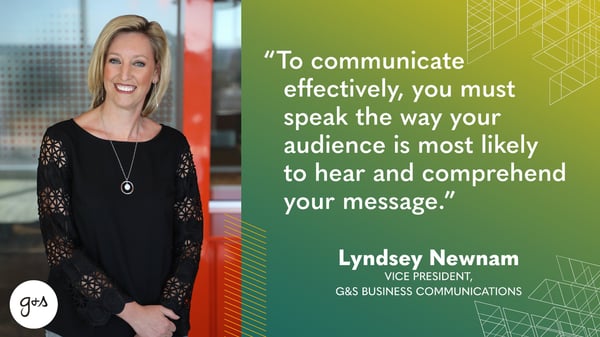
To communicate effectively, you must speak the way your audience is most likely to hear and comprehend your message. It’s important to monitor conversations to understand what is being said, what terms are being used, what sentiments stand out and what volume each topic has.
- Capitalize on opportunities to provide credible information on critical topics. Consumers often consult social media or online forums, which can be unreliable. As a result, companies need to take advantage of opportunities to provide educational resources and credible data in addition to product information. Social listening conducted by G&S found that online conversation volume among consumers about drought in the past year reached nearly 60,000 mentions, primarily focused on drought, watering and resistant plants. However, when analyzing conversations among landscapers and irrigation manufacturers, the conversations were more product-driven than issues-driven. This indicates an opportunity for companies to capitalize on consumer awareness of these issues and to engage with them by offering expertise on the topics consumers are discussing.
- Communicate benefits, not just attributes. When it comes to product consideration, especially regarding sustainability, end users want to see and feel their values reflected in what they buy. If they don’t, they may not want the product.
“Think about the different impact you can have over time when you engage in a credible way and the consumer really understands the impact, both on them and the impact they can have on the planet, by making the right choice with the right products,” explained Melo. As companies communicate about their solutions, they must share the benefits and values for the users, not just product features.
- Use influencers who are credible and engaging. To complement owned communications, companies can employ social media influencers to help amplify their messaging. To succeed, however, it is critical for company and influencer relationships to be authentic and symbiotic.
“It takes using people who have a loud and credible voice and are engaged with consumers to tell the story and make it real. It has to be authentic, it has to be engaging, it has to be short,” said Melo. “Good or bad, social media and influencers are shaping the voice and minds of consumers.”
Misconception is not a one-time problem. It’s an enduring challenge that you must constantly address and correct in your messaging. Don’t wait for a drought to hit your communications success before taking a look at your strategy. As today’s world continues to transform and consumers continue to evolve, your communications strategies should be transforming as well to communicate through misperceptions.


